• Skip to primary navigation
  • Skip to main content
  • Skip to primary sidebar
TheWayoftheWeb

TheWayoftheWeb

Content and Digital Marketing Specialists

  • Blog
  • The Cipher
  • About Us
    • Useful Resources For Businesses In Peterborough, UK
  • Contact Us
  • Show Search
Hide Search

Marketing

What brands need to learn about true fans

February 5, 2012 By Dan Thornton

Are you watching the Super Bowl tonight between the New England Patriots and the New York Giants? I’ll be watching at least some of it, but my main interest in the NFL was in the in 90’s, watching Troy Aikman and the Dallas Cowboys in whatever coverage was available in the UK.

By contrast, I was on the edge of my seat during the Ireland – Wales match in the Six Nations Rugby today. And [spoiler alert] being a passionate Ireland supporter (The two manifestations of my Irish ancestry are in rugby and whiskey), the end result was a bit of a kick in the teeth.

Chatting with a friend, I was struck by the difference between the ‘fan of a game’, as I am with the NFL, and he is with rugby, and the ‘true fan’ of a team. Watching a match as a fan of a sport can be quite relaxing, as you can enjoy an entertaining game without investing your own emotion. Watching as a fan of a team is a stressful rollercoaster of emotions which often ends in disappointment.

The Agony of Defeat

In fact, even when your team wins, it can be so stressful than you have little memory of the event, which was certainly true when I watched Chelsea win the 1997 FA Cup Final against Middlesborough, which was the first major victory for the team in 27 years, and the first in my lifetime. As I walked home from the pub after watching the game and people asked about it, I could remember the score, but not even who had scored. And that’s including a goal after just 42 seconds which remained a record for 12 years!


What brands need to know about their true fans

Here’s the important point for brands, and it isn’t about pricing season tickets, or how to sell hats and scarves. It’s the fact that the majority of fans will continue to follow their team with passion and enthusiasm despite the fact that they won’t win. Statistically, 99% of the teams in any competition will end up losing at some point, and will have lost the previous year, and the year before that, and potentially for many years before.

Brands always want to portray their best side, hiding flaws and imperfections in the belief that this breeds success, rather than some kind of marketing uncanny valley.

More perfect than Helvetica

The belief has always been that brands need to portray themselves as perfectly better than their competitors to attract customers, and because any flaw leads to complaints.

But that’s not the case – it’s how you react to any problems. The main complaints about brands via the internet are not that they screwed up – it’s that they don’t respond, react, or solve their screw-ups.

If you’re brave enough to talk about your problems, failures and mistakes with honesty and how you’ve solved them, it works. Talk to all the community managers who meet with their communities and find that explaining the reason behind common issues results in those communities becoming staunch defenders of them.

There are fans in the world who have spent decades following teams in lower leagues and divisions with extremely little chance of success, and will make great sacrifices to support them day-in and day-out. Wouldn’t you like customers like that?
Failing to understand the social media economy?

February 3, 2012 By Dan Thornton

This is a great example of how you can listen to someone talk about the way that social media, social business and engagement are all supposed to work, and yet miss the entire point when it comes to actually trying to interact. If you’re not familiar with Gary Vaynerchuk, it’s worth me pointing out there’s some strong language.

It’s so often the case, particular with larger companies and the relentless need to show immediate ROI that even when someone understands the concept of earning what they want, that they succumb to the temptation of just diving straight in with the request, because someone has insisted they need to show results in the next day or week.

(Incidentally, Gary has released two books, Crush It! and The Thank You Economy. Both are well worth reading).

It’s why I’m been sharing this article by Michael Ellsberg on the Forbes website – a recommendation from one notable blogger did more for the success of his book than national broadcast television or newspapers. But the flipside is that he’d built that relationship up over a period of years, rather than days, weeks or months.

That’s also potentially a great reason to use freelance resources, which is something I intend to expand on. If you’re a new company or you’ve never tried earning coverage and referrals before, then it can take a long time to build those relationships. Whereas I’ve tried to work on them every day for the past decade, which is why I’m able to survive via word-of-mouth referrals and work via previous clients, colleagues and friends.

How to kill a cultural icon…

January 22, 2012 By Dan Thornton

There’s a classic Bill Hicks routine which states that as soon as you appear in a commercial for a product, you are removed from the artistic cannon forever. And I struggle to think of a time when applying that role would have caused me to miss out on something particularly great – although the age-old tradition of celebrities popping up in seemingly random adverts in countries like Japan mean they may be some examples.

But what happens when the stars aren’t human, but characters in a story which has become immensely popular and adopted by millions around the world with their own passionate interpretations and fandom? OK, so we should probably be used to this by now, judging by the way this particular story has been used, exploited and hollowed-out for every possible revenue stream, but still…

So the character whose entrance into a rebel ship inspired fear and nightmares in generations of people is now a middle-management consultant to a chain of average computer retailers.

If you remember all those strange people around the world who declare themselves as a Jedi whenever a census appears, a reasonable percentage of them aren’t doing it entirely as a joke – there’s enough evidence online of the Jedi mindset being compared to a more recognised religion. Without debating the merits of each religion, this is essentially like seeing the head of whichever version you follow decide to start pimping themselves out for commercials.

I’m done with Star Wars…

I don’t remember the first time I watched Star Wars, but I do remember a friend actually having a film projector at an early  birthday party to screen The Empire Strikes Back. And whilst my collection of toys was sold by my father without my knowledge when I was a teenager, thus destroying a potential retirement fund, I’ve since discovered that my Star Wars lunchbox still survives in a dusty corner of the garage. And I do have the original trilogy on VHS just so I could show my son that Han fired first, just as it should be.

But that’s balanced with the fact I don’t expect every piece of entertainment to be an artistic statement, the history of merchandising and utilising the Star Wars world to extract every last penny from it, and the fact various adverts have appeared in the past with some of the characters – I’ve discovered Yoda apparently also picked up a cheque for a Japanese advert a while ago, like so many other stars.

I’m in my 30s, I’ve worked in the publishing and entertainment industries for 10+ years, and I know how all this works – and yet I feel a sense of loss with the resignation. One of the guiding stories of my childhood, which I wanted to share with my son as he grows older, has now lost any magic it had. It’s no more meaningful than whichever animated feature will be on the side of Happy Meals next month.

Marketing with listening and meaning:

If you’re one of the growing number of companies embracing the approach of standing clearly for a defined purpose, then you might believe you’re above this risk.

And if you’re just in the business of churning out a product, perhaps an unexciting one, then you might believe it doesn’t matter.

But the important thing is that I don’t think George Lucas and everyone else involved had set out to make a serious artistic statement which could spring into a belief and support which has last 30+ years. He made some films, and realised that there was more money to be made around them than directly from them – particularly pre-VHS, DVD and Streaming.

The meaning and experiences came from the people who watched,shared, discussed, and believed – would you know if the same thing was growing around your brand? Are you not only monitoring but paying attention, analysing, listening and shaping your future in that context?

Good service, bad service and social media

January 13, 2012 By Dan Thornton

I went for a quick shopping trip at Bluewater yesterday, and it once again highlighted how important it is to align the whole customer experience of your brand, including your products, service levels and marketing. A comparison of three retail and social media experience sum it up nicely:

Store 1: Uniqlo:

I’ve heard various things about Uniqlo and browsed their stores, but this was the first time I’ve intended to make a purchase, having seen numerous mentions of their selvage jeans (Selvage refers to the method of stitching, if you’re not a denim geek). And the level of service was great – first someone was able to help me find the one pile of the right jeans amongst the masses on display, and also explained that they offer a free alteration service when I struggled to find the right leg length.Then the young lady manning the fitting rooms was also friendly and helpful when arranging the alterations and pinning the jeans, and the till staff maintained that. After 40 minutes I came back and my jeans were ready.

Store 2: Ed’s Easy Diner:

I’m a big fan of good burger joints and Americana, so Ed’s should have been perfect. But it was average for various reasons. Partly the quality of food doesn’t quite justify the price (the bacon on my burger was burnt and rock solid, the strawberry milkshake was mainly vanilla, and the chips were undercooked). And partly because the three waiting staff between them were disinterested at best. Having invested in something slightly overpriced and with a hefty amount of competitive restaurants nearby, seeing our food and drinks slammed on the table or being ignored when we tried to pay the bill really didn’t make up for the food. Especially when I’ve experienced alternatives including the constant favourite Byron Burger in London (for example).

Store 3: Soletrader:

The actual service in Soletrader wasn’t bad – reasonably quick, friendly and helpful. The problem is that they were totally hampered by the store infrastructure. I’ve received a voucher for the store, which can’t be redeemed online. I want a specific pair of trainers, which are never in stock in my size. And although I can order them to a physical store, I really wanted to try the two closest sizes to check the right fit. It’s the sort of problem which turns a normally docile and compliant customer into one who will cause any amount of hassle to get rid of his voucher and never go near the store again.

How about the social media marketing:

When I came back online, I decided to tweet about the 3 different levels of service – good, average, and hampered by store policies.

Interestingly, Uniqlo didn’t need to respond or acknowledge my recommendation, but various friends echoed the fact that instore it’s a great experience (Although apparently their email marketing can be pretty overwhelming). That’s fine as I’m quite happy to follow their Twitter account.

Ed’s Easy Diner didn’t respond which is consistently disapointing. I’d hoped to be reassured that my experience may have been a one-off, but can only assume it wasn’t.

But the most interested in the fact that Soletrader did get back to me on Twitter. I got an acknowledgement and an apology for the hassle, although yet again, someone attempting to offer service and customer care couldn’t actually provide a solution, although they did say ‘we’re looking into a way gift vouchers can be used online in the future’.

More effort needed:

Recent stats show that customers expectations of service and feedback via social media outstrip the expectations of companies to monitor and respond. That has to change, and it has to go just beyond monitoring mentions and passing on details.

I wouldn’t necessarily expect Ed’s to respond with any offers or compensation (though I wouldn’t have complained if they did), but at least acknowledging their was a problem with the service offered and finding out more about my experience may have helped them identify a way in which they could improve their business in a location with a high level of competing restaurants and a fairly captive market. It certainly wasn’t busy when we ate, and yet we still ended up on a table with a jukebox out of order.

And Soletrader really need to move more quickly to solve their infrastructure problems, or empower staff to sort a solution out. I hate to quote the Zappos example yet again, but it’s appropriate for a footwear company. If the marketing team on Twitter wanted to turn an annoyed customer into a loyal one, they’d just need to grab a pair of Onitsuka Tigers in blue/red in size 7 and size 8 – send them both to my home address and allow me to send back the pair which didn’t fit. I can give them the voucher code in advance, and they can deal with the hassle of it not being valid for an online order. But having checked the Soletrader site, it appears of 13 different shoes, they have 3 in stock in size 7 across the UK.

The financial risk would be the outlay on posting one reasonable sized box (About £10), and the risk of losing one additional pair of trainers (Retail £70, so under that). I wonder what their current cost is for customer acquisition, and what value they put on their marketing and advertising expenditure, but without being too engrossed in follower numbers, the fact that I personally have twice as many as their official account means that it would probably be a cost efficient exercise overall – and the fact that I also have a number of sneaker addicted friends (including a couple of sneaker collectors) would surely pay off.

Compare that to the knowledge that if I’d just paid for trainers I’d get free postage and returns to store. But by receiving a voucher which ties me into that store I lose all the benefits and service, and instead gain additional hassle.

Is Google becoming evil?

November 3, 2011 By Dan Thornton

Given the high standards Google set for itself with the aims of indexing the world’s information, and the mantra of ‘Don’t Be Evil’, it’s likely we hold it to higher standards than most companies. After all, in 2004, Joel Bakan described corporations in this way ‘As a psychopathic creature, the corporation can neither recognise nor act upon moral reasons to refrain from harming others. Nothing it its legal makeup limits what it can do to others in pursuit of its selfish ends, and it is compelled to cause harm when the benefits of doing so outweight the costs’.

Now whether or not Google is becoming evil, there are certainly much worse offenders around the world, but given the lofty ideals and the integral part that has played in the Google brand, any start down the slope to the activities of the traditional corporation could be damaging. You might somewhat expect it of Microsoft, or ignore it if you’re a member of the Cult of Apple, but when Google acts in ways which particularly hurt small businesses, publishers and potentially vulnerable individuals, it’s particularly jarring.

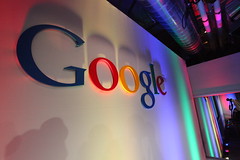
Google Logo in Building43


‘Secure search’:

The right of an individual to online privacy and security is a good thing, and difficult to argue against. The use of https by sites is a positive step and one that shouldn’t be discouraged.

But recently Google made an announcement that Google Analytics would no longer provide keyword information for users who are logged into their Google profile and using secure search. That move was done with the stated aim of privacy and currently a relatively small percentage of users are searching via the secure connection.

Two problems with that – already many people are reporting significant and growing numbers who are now hidden in terms of keyword data, and secondly, having had access to that data for years, it does not indicate in any way, shape or form who was using a specific keyword and therefore affect privacy. All I knew was that 20% of people visiting in the last month typed in ‘thewayoftheweb’ into a Google search box, regardless of whether they were secure or not, and no further information was available.

But hang on – if it really doesn’t matter to individual user privacy, could it be related to the launch of a paid Google Analytics for enterprise with a hefty price? After all, if you’re paying $150,000 for Google Analytics Premium, you’d be expecting all information.

So Google moves in a traditionally corporate way, using a freemium model to gain market share, then starting to remove features from the free version and concentrate on getting the top percentage of big users to start paying.

The people who lose out are small business and publishers, who won’t know how an increasing number of visitors are finding their site, and that number will only increase with more people staying logged into Gmail and Google+. After all, no-one can optimise for searches they don’t know are happening – although I’m not sure if the privacy still applies when I click-through on Google Adsense or Adwords advertising next to the search results, regardless of my connection.


‘Anti-social Google Reader’

There’s been a pretty big uproar regarding the redesign and loss of features which has been rolled out to Google Reader, despite the paltry week’s notice given to users. My concerns regarding the actual design are fairly minor, as it makes it slightly more difficult to use, but I can cope.

What’s difficult to reconcile is the loss of various features which are obviously and explicitly an attempt to shoehorn users into more activity on Google+, which have a number of negative effects for individuals and businesses.

  • Individuals can no longer have a basic sharing and following network within Google Reader. As opposed to the thousands of connections I had on social networks, there was a small group of around 30 or so I followed on Google Reader, simply because I was intently interested in seeing what they deemed worthy of curating and sharing on a tight subject list, without necessarily interacting with them about their holiday photos. And as with Twitter, it was asynchronous sharing – they didn’t have to know me or approve me, or figure out what I want then create a Google+ circle on that premise.  But worse is the claim that many users in more repressive countries were using Google Reader as social networks were blocked, and had connections of several thousand in many cases. That’s entirely lost now.
  • Business revenue is affected: Via RSS, and Google’s own acquisition of Feedburner, a business could display advertising in their RSS feed. In addition to losing control of sharing a full or partial RSS feed, the snippets shared to Google+ also conveniently remove any feed advertising – Google may lose their share of that revenue, but also completely control Google+ and any monetization that happens.
  • RSS is under threat: Consumer adoption of RSS has remained relatively small, but concentrated towards heavy and earl-adopting technology users. And of that group, Reader had a market share of about 70%, crushing most competitors and removing incentives to innovate in that area. If Google has decided RSS is redundant, what will happen to the popular Feedburner RSS service which powers many, many blogs RSS feeds? The analytics side of Feedburner has been pretty much permanently broken, but it still provides a simple and easy way to set up a feed which is compatible with numerous other places and services.
    In addition, for business use, it’s been possible to take the feed of Google Reader shared items, or utilise the unofficial Google Reader API to separate out tags to put onto business intranets or publish externally. Given that shared items is gone (Including my own 16,000+ articles over 5 years), what faith can you have in an unofficial API to support paying clients?


 WTF Google?

I’m certainly not against businesses making money – I’d like my own to keep earning more in the future, and my expertise is more directed towards the content and marketing side of business operations. It’s entirely possible that in such a large organisation it may just be coincidental that various changes all suggest a new self-interest which has happened just as a founder resumes control of the company and indicates more of a focus on their new social business.
I’m also enthusiastic about experimentation and change – the fact that Google Buzz and Google Wave have both been deemed failed experiments doesn’t negate the important experience and influence they may have had both within Google and externally.

But I do question whether the current focus on Google+ is causing the big G to lose some of what has made it so immensely popular and powerful. Whether that’s the influence of the success of Facebook as a walled garden which uses elements of coercion to get us to help power it in terms of advertising and brand revenue, or whether it’s just the misalignment of every non-search free product as a feeder for Google+, I can’t say.

Occupy Google+

But either way, I’m not alone in feeling unsettled by Google’s new direction, and as we’ve seen, current success doesn’t mean permanence, particularly online. Google has some security in that the integration of Gmail, Reader, Analytics, Apps for Business etc are so deep into our lives and companies that it will take a significant motivation to switch, but given the current moves from my techie friends to alternative feed readers, and the existence of established and good paid analytics alternatives, it’s not inconceivable that the move could start to happen.

And given the results of some blind search engine result testing, it appears that one of the main reasons for Google continuing to dominant search is the familiarity of the brand, rather than the results being returned in comparison to Bing – which means that losing the perception of their values may not just damage the potential success of Google+, but could also lead to a greater threat to their core search business.

  • « Go to Previous Page
  • Page 1
  • Interim pages omitted …
  • Page 5
  • Page 6
  • Page 7
  • Page 8
  • Page 9
  • Interim pages omitted …
  • Page 30
  • Go to Next Page »

Primary Sidebar

Join us…

  • Facebook
  • Instagram
  • LinkedIn
  • RSS
  • Twitter

We only exist to deliver results for your business. So you get fresh Content, expert SEO, engaging Social Media, or a new Website which is right for you – and your customers.

We help you build your brand, reach more customers and increase your revenue

Search

Categories

Creative Commons License
This work by TheWayoftheWeb is provided under a Creative Commons Attribution-NonCommercial-ShareAlike 4.0 International License.

Start growing your business today Contact Us

Recent Comments

  • Don't wait for your ship to come in... - TheWayoftheWeb on Freelance & Consultancy

TheWayoftheWeb

Copyright © 2026· TheWayoftheWeb Ltd. Company Number 08038527. ICO registration: ZB397650